The story
Why Eko exists.
Across Australia's commercial built environment and development sector, the same pattern shows up over and over: water and environmental engineering that doesn't connect to the people who have to use it.
Building owners receive audit reports they can't act on. Dust collecting reports that are long on findings, short on prioritised actions, calibrated to win the next engagement rather than solve the current problem.
Facility managers get water management plans written for the regulator rather than for the people running the building. These are so often defensible on paper, but useless on a Monday morning.
Construction crews work from environmental documents written by people who have never stood on a site at 6am, with crews ready to go. Never had to install a silt fence on a slope with no clear access, never had to explain a 47-condition consent to a site supervisor balancing a multi-staged project team.
Sustainability teams wrestle with monitoring data nobody has structured for the reporting frameworks they actually have to satisfy; NABERS, GRI 303, GRESB, AASB S2. Each one asking different questions of the same underlying numbers, and the data sitting in dashboards built for someone else's question.
These aren't failures of technical capability. The market has plenty of technically competent consultants. They're failures of orientation. The work was written for the wrong audience. The problem was never properly diagnosed.
Eko exists to close that gap. Providing solutions to identified problems, not what's easy to cut and paste.
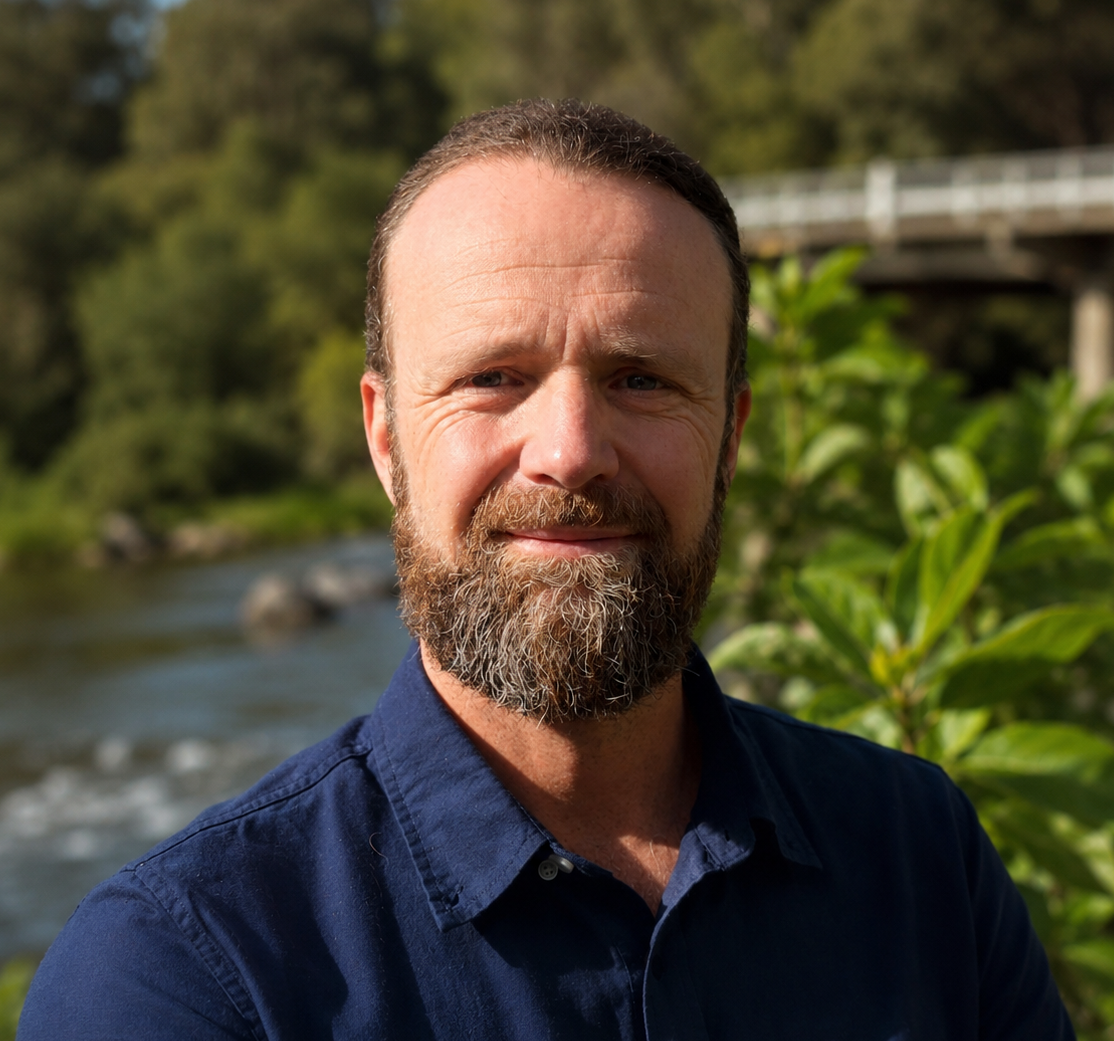
Jeremy Snowdon-James
Director & Principal Engineer
B.Eng (Environmental) · 15+ years in water and environmental practice across NSW, QLD and NT · LinkedIn